
Microchip PIC16F1933-I/ML 8-Bit Microcontroller: Architecture, Features, and Application Design Considerations
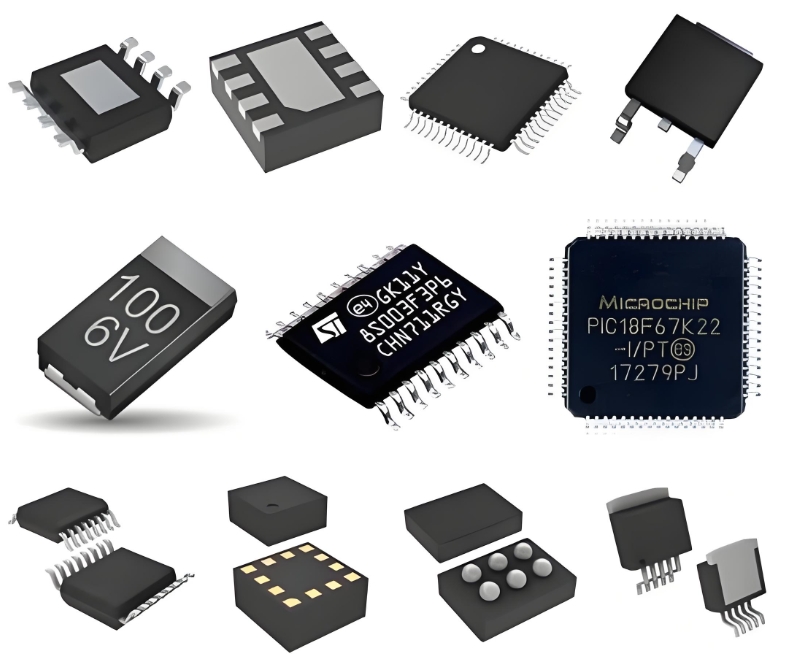
The Microchip PIC16F1933-I/ML represents a robust and versatile member of the enhanced mid-range PIC16F family. Housed in a compact 28-pin QFN (ML) package, this 8-bit microcontroller (MCU) is engineered for applications demanding high performance, low power consumption, and a rich set of integrated peripherals. Its architecture is built around an enhanced Harvard design, featuring a 14-bit wide instruction set that offers a compelling mix of simplicity and efficiency.
Architectural Overview
At the core of the PIC16F1933 lies the enhanced mid-range core with a 16-level deep hardware stack. This architecture allows for efficient execution of instructions, most of which are single-cycle, except for program branches which require two cycles. The core is augmented with 35 instructions, simplifying development. A key architectural advantage is its orthogonal instruction set, where almost all instructions can address any register using any addressing mode, significantly easing programming. The MCU operates at a maximum frequency of 32 MHz, delivering up to 8 MIPS of performance.
Key Features and Peripherals
The PIC16F1933 is distinguished by its extensive suite of integrated peripherals, designed to minimize external component count and system cost.
Memory: It contains 7 KB of Flash program memory, 368 bytes of RAM, and 256 bytes of non-volatile EEPROM data memory for storing critical data.
Analog Capabilities: It features a high-performance 10-bit Analog-to-Digital Converter (ADC) with up to 14 channels, enabling connection to multiple sensors. It also includes two analog comparators for basic threshold detection.
Timing and Control: The device is equipped with multiple timers, including 8-bit and 16-bit timers. A standout feature is the Enhanced Capture/Compare/PWM (ECCP) module, which provides sophisticated control for brushed DC motors and other applications requiring pulse-width modulation.
Communication Interfaces: It supports essential serial communication protocols, including EUSART (for RS-232/UART), SPI, and I2C, facilitating easy communication with other ICs, sensors, and peripherals.
Specialized Hardware: The mTouch capacitive sensing module allows for implementing touch-sensitive user interfaces without external components. Furthermore, its nanoWatt XLP technology enables extremely low power consumption, making it ideal for battery-operated devices.
Application Design Considerations
When designing with the PIC16F1933-I/ML, several factors are crucial for a successful implementation:
1. Power Management: Leverage the nanoWatt XLP technology by strategically using the SLEEP and IDLE modes. Carefully manage the clock source (e.g., internal oscillator vs. external crystal) based on the application's need for speed versus power savings.
2. Peripheral Interrupt Management: With numerous peripherals capable of generating interrupts, designing a robust interrupt service routine (ISR) is critical. Prioritize interrupts correctly and ensure efficient context saving and restoring to maintain system responsiveness.
3. Analog Design: For accurate ADC readings, pay close attention to PCB layout. Use dedicated ground planes, proper decoupling capacitors close to the MCU's power pins, and consider reference voltage stability. Sampling time must be configured appropriately for the signal source impedance.
4. Pin Multiplexing: The 28-pin package has multiple functions multiplexed onto single pins. The Peripheral Pin Select (PPS) feature offers flexibility but requires careful planning during the schematic design and firmware initialization stages to avoid conflicts.
5. Robustness in Noisy Environments: For industrial or motor control applications, employ best practices for noise immunity. This includes using the ECCP's hardware dead-band control for motor drives, adding snubber circuits, and ensuring proper isolation for communication lines.
ICGOOODFIND
The PIC16F1933-I/ML is a highly integrated and cost-effective solution, perfectly suited for a vast array of applications including consumer electronics, industrial control, automotive subsystems, sensor nodes, and interactive user interfaces with touch sensing. Its blend of processing power, ultra-low power operation, and a rich peripheral set makes it an excellent choice for designers seeking to create efficient and feature-rich embedded systems.
Keywords: PIC16F1933, nanoWatt XLP, Enhanced Peripherals, 8-bit Microcontroller, Capacitive Sensing

