
Microchip MT8888CN1 DTMF Transceiver: Operation, Applications, and Design Integration
The Microchip MT8888CN1 is a highly integrated, monolithic Dual-Tone Multi-Frequency (DTMF) transceiver, representing a pivotal component in modern communication systems. It combines both transmitter and receiver functions on a single CMOS chip, offering a robust and efficient solution for generating and decoding the standard DTMF signaling tones used in telephony and numerous other control applications.
Operation: Core Functionality Explained
The operation of the MT8888CN1 can be divided into its two primary functions: transmission (encode) and reception (decode).
Transmit Mode (Encode): In this mode, the IC generates DTMF tones. A microcontroller or digital circuit writes a 4-bit code to the device's internal transmit data register. This code corresponds to one of the 16 standard DTMF digits (0-9, A-D, , ). The on-chip switched capacitor D/A converter then generates a precise, high-accuracy analog sine wave superposition of two frequencies: one from a low-group and one from a high-group. A key feature here is the provision of a DTMF tone output alongside a separate, attenuated "row tone" output, which can be useful for specific mixing applications.
Receive Mode (Decode): The receiver section employs a sophisticated digital counting decoding algorithm to identify incoming DTMF tones. It first separates the incoming signal into its low and high-frequency components using a bandsplit filter. It then passes these signals through filters and digitizes them to determine their frequencies. The IC can distinguish between valid DTMF signals and mere speech or noise through its integrated call-progress (CP) mode and a steered decoding capability. Upon successful validation of a tone pair, the decoded 4-bit digit is placed into the receive data register, and an interrupt (IRQ/CP) pin is asserted to alert the system controller to read the data.
Key Applications
The versatility of the MT8888CN1 extends far beyond traditional telephony.
Telecommunication Systems: Used in PBX systems, answering machines, and caller ID units.
Remote Control Systems: Enables remote equipment control over telephone lines or radio links (e.g., controlling industrial machinery, activating/deactivating security systems).
Amateur Radio (Ham Radio): Widely used for autopatch systems and repeater control.
Interactive Voice Response (IVR) Systems: Forms the backbone of automated menu systems used in customer service.
Microcontroller-Based Projects: Serves as a simple and effective interface for adding telephone-line connectivity to microcontroller projects for data acquisition and remote control.
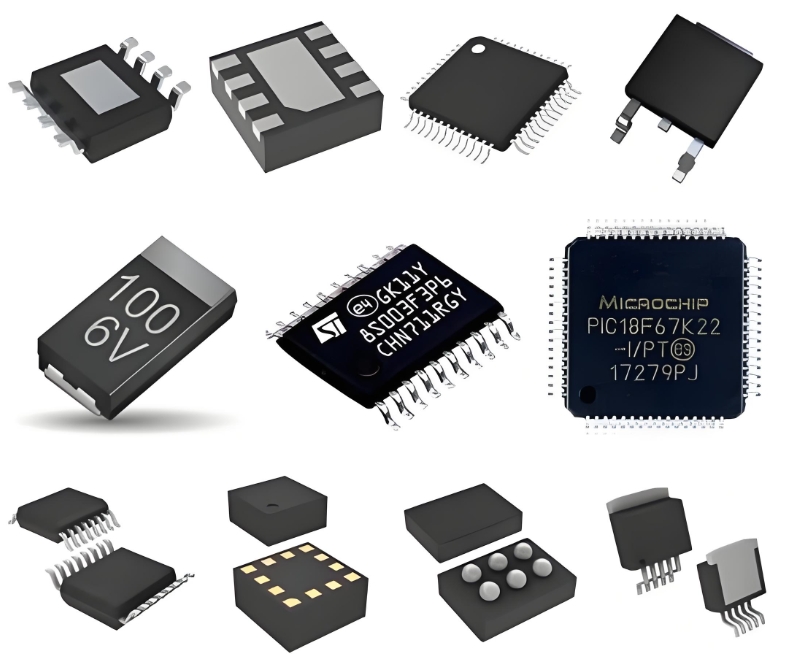
Design Integration and Considerations
Integrating the MT8888CN into a design requires attention to several key areas:
1. Microcontroller Interface: The chip features a bidirectional bus interface compatible with most microcontrollers, simplifying data read/write operations.
2. Clock Circuit: It requires an external 3.579545 MHz crystal (the standard TV color-burst crystal), which is common and inexpensive, to generate its precise internal timing references.
3. Analog Interface: The transmit output typically requires filtering and amplification before being connected to a telephone line or radio transmitter input. The receive input often needs conditioning, such as gain adjustment and clipping protection, to ensure optimal performance.
4. Power Supply: It operates from a single +5V power supply, making it ideal for digital systems.
5. Status Monitoring: The designer must implement firmware to monitor the IRQ/CP and status registers to manage the decoding process and handle different line conditions effectively.
The Microchip MT8888CN1 remains a quintessential solution for robust DTMF generation and decoding. Its high level of integration, combining both transmit and receive paths with a simple microprocessor interface, significantly reduces external component count and design complexity. For engineers and hobbyists developing systems requiring remote telephonic or wireless tone control and data entry, the MT8888CN1 offers a proven, reliable, and cost-effective integrated circuit. Its enduring presence in datasheet libraries underscores its utility in bridging the analog and digital communication worlds.
Keywords:
1. DTMF Transceiver
2. Microcontroller Interface
3. Tone Decoding
4. Remote Control
5. Telecommunication

